

- University
- Academic
- Schools/Vocational Schools
- Vocational School of Justice
- Vocational School
- Vocational School
- Department of Banking and Insurance (Turkish)
- Department of Computer Programming (Turkish)
- Department of Foreign Trade (Turkish)
- Department of Graphic Design (Turkish)
- Department of Interior Design (Turkish)
- Department of Construction Technology (Turkish)
- Department of Occupational Health and Safety (Turkish)
- Department of Media and Communication (Turkish)
- Department of Architectural Restoration (Turkish)
- Department of Radio and Tv Programming (Turkish)
- Department of Civil Aviation Cabin Services (Turkish)
- Department of Civil Aviation Transportation Management (Turkish)
- Department of Tourism and Hotel Management (Turkish)
- Department of Applied English Translation
- Vocational School Of Health Services
- Vocational School Of Health Services
- Department of Child Development (Turkish)
- Department of Physiotherapy (Turkish)
- Department of Paramedic (Turkish)
- Department of Opticianry (Turkish)
- Department of Medical Documentation and Secreteriat (Turkish)
- Department of Medical Imaging Techniques (Turkish)
- Department of Medical Laboratory Techniques (Turkish)
- Department of Elderly Care (Turkish)
- School of Applied Management Sciences
- School of Foreign Languages
- Faculties
- Faculty of Arts and Sciences
- Faculty of Fine Arts and Design
- Faculty of Law
- Faculty of Communication
- Faculty of Business
- Faculty of Engineering
- Faculty of Engineering
- Department of Computer Engineering
- Department of Biomedical Engineering
- Department of Electrical and Electronics Engineering
- Department of Industrial Engineering
- Department of Food Engineering
- Department of Genetics and Bioengineering
- Department of Aerospace Engineering
- Department of Civil Engineering
- Department of Mechanical Engineering
- Department of Mechatronics Engineering
- Department of Software Engineering
- Faculty of Health Sciences
- Medicine
- Graduate School
- Common Courses
- Schools/Vocational Schools
- Research
- Research Centers
- Library
- Smart Campus
- Technology Transfer Office
- İzmir Sciencepark
- Continuous Education Center (EKOSEM)
- Children's University
- Ethics Committee
- Teaching and Learning Center (EKOEĞİTİM)
- Psychology Application and Research Center
- Researcher Training Coordinatorship
- Research Collaborations And Innovation Coordinatorship
- Campus
- INTERNATIONAL
- Contact
- 25TH YEAR
Department of Economics
ECON 203 | Course Introduction and Application Information
| Course Name |
Economic History
|
|
Code
|
Semester
|
Theory
(hour/week) |
Application/Lab
(hour/week) |
Local Credits
|
ECTS
|
|
ECON 203
|
Fall/Spring
|
3
|
0
|
3
|
6
|
| Prerequisites |
None
|
|||||
| Course Language |
English
|
|||||
| Course Type |
Elective
|
|||||
| Course Level |
First Cycle
|
|||||
| Mode of Delivery | Blended | |||||
| Teaching Methods and Techniques of the Course | - | |||||
| National Occupation Classification | - | |||||
| Course Coordinator | ||||||
| Course Lecturer(s) | ||||||
| Assistant(s) | ||||||
| Course Objectives | The aim of this course is to give students a background on economic developments and origins of contemporary society. The main focus of the course will be the emergence and the development of social and economic systems, and how these systems have come toshape our contemporary world, by giving emphasis on the European context. Keeping this aim in mind, we will first consider what economic history is (what kind of a discipline it is, how is different from economics, etc.), and then consider what in human history had paved the way to capitalism. The course will be ended with a brief discussion of the contemporary era, in which the process of globalization is said to be prevalent. |
| Learning Outcomes |
The students who succeeded in this course;
|
| Course Description | The aim of this course is to inform students about the historical development of economic processes and institutions and the evolution of production, distribution, consumption patterns, and the factors of production in the world and particularly in Western Europe. Some of the topics on this course include: economic processes in the ancient world and middle ages, geographical expansion of the Western world, industrial revolution, developments in agriculture, finance, banking sectors during the expansion process of the main European countries, application of technology, developments in telecommunication and transportation, the role of the state, the growth of the world economy and impact of the European industrialized countries on the rest of the world, and the economic developments of the post World War I and II. |
| Related Sustainable Development Goals |
|
|
|
Core Courses |
X
|
| Major Area Courses | ||
| Supportive Courses | ||
| Media and Management Skills Courses | ||
| Transferable Skill Courses |
WEEKLY SUBJECTS AND RELATED PREPARATION STUDIES
| Week | Subjects | Related Preparation |
| 1 | Preparation | Arrighi, Giovanni. The Long Twentieth Century: Money, Power, and the Origins of Our Times. London: Verso, 2010. |
| 2 | Introduction to Historical Capitalism | Required: Arrighi, Introduction, pp. 1–27 Optional: Braudel, Fernand. The Wheels of Commerce, pp. 21–23, 229–230. Braudel, Fernand. Afterthoughts on Material Civilization and Capitalism, pp. 63–75. Smith, Adam. The Wealth of Nations, pp. 190–191, 235–237. Wallerstein, Immanuel. Unthinking Social Science, chs. 14–15. |
| 3 | Hegemony and the Modern Interstate System | Required: Arrighi, Chapter 1, pp. 28–47 Optional: Ruggie, John Gerard. “Territoriality and Beyond.” International Organization 47, no. 1 (1993). Tilly, Charles. Coercion, Capital, and European States, pp. 28–33. Wiesner-Hanks, Merry E. Early Modern Europe, chs. 1 and 3. |
| 4 | Comparative Hegemonies: Britain and the United States | Required: Arrighi, Chapter 1, pp. 48–85 Optional: Cain, P. J., and A. G. Hopkins. British Imperialism, chs. 2–3. Rosenberg, Emily S. Spreading the American Dream, Introduction and chs. 1–2. Darwin, John. After Tamerlane, chs. 11 and 15. |
| 5 | The Genesis of High Finance | Required: Arrighi, Chapter 2, pp. 86–110 Optional: Lane, Frederic C. Profits from Power, ch. 3. Pirenne, Henri. “The Stages in the Social History of Capitalism.” Parks, Tim. Medici Money, Introduction and chs. 1–3. |
| 6 | The Genoese Systemic Cycle | Required: Arrighi, Chapter 2, pp. 111–129 Optional: Lane, Frederic C. Venice: A Maritime Republic, chs. 9–10. Braudel, Fernand. The Mediterranean, Part II, ch. 5. Parker, Geoffrey. The Military Revolution, ch. 2. |
| 7 | The Dutch Systemic Cycle | Required: Arrighi, Chapter 2, pp. 130–147 Optional: Braudel, Fernand. The Perspective of the World, ch. 3. de Vries, Jan. The Dutch Rural Economy, chs. 5 and 7. |
| 8 | Midterm Exam | |
| 9 | The Dialectic of State and Capital | Required: Arrighi, Chapter 2, pp. 148–162 Optional: Braudel, Fernand. The Perspective of the World, pp. 116–174. |
| 10 | The British Systemic Cycle: Industry and Empire | Required: Arrighi, Chapter 3, pp. 163–178 Optional: Hobsbawm, Eric. Industry and Empire, selected chapters. O’Brien, Patrick. Selected essays on British industrialization and empire. Marshall, P. J. Selected writings on the British Empire. |
| 11 | Capitalism and Territorialism in the British World System | Required: Arrighi, Chapter 3, pp. 179–218 Optional: Braudel, Fernand. The Perspective of the World, pp. 352–385. Cain, P. J., and A. G. Hopkins. “The Political Economy of British Expansion.” Economic History Review 33, no. 4 (1980). |
| 12 | Patterns of Recurrence and Evolution | Required: Arrighi, Chapter 3, pp. 219–246 Optional: Marx, Karl. Capital, vol. 3, ch. 15. Weber, Max. General Economic History, chs. 12 and 18. Mensch, Gerhard. Stalemate in Technology, chs. 1–2, 4. |
| 13 | The American Systemic Cycle I: Market and Plan | Required: Arrighi, Chapter 4, pp. 247–276 Optional: Chandler, Alfred D. Jr. The Visible Hand, chs. 7–8. Aglietta, Michel. A Theory of Capitalist Regulation, Part I. |
| 14 | The American Systemic Cycle II: Global Order | Required: Arrighi, Chapter 4, pp. 277–308 Optional: Ruggie, John Gerard. “International Regimes, Transactions, and Change: Embedded Liberalism in the Postwar Economic Order.” International Organization 36, no. 2 (1982). Eichengreen, Barry. Globalizing Capital, ch. 4. Strange, Susan. States and Markets, chapter on structural power. |
| 15 | Global Crisis and Financialization | Required: Arrighi, Chapter 4, pp. 309–335; Optional: Krippner, Greta R. Capitalizing on Crisis, Introduction and ch. 2. |
| 16 | The Future of Capitalism and Rise of the East Asia | Required: Arrighi, Epilogue and Postscript Optional Arrighi, Giovanni. Adam Smith in Beijing, Introduction and Conclusion Panitch, Leo, and Sam Gindin. The Making of Global Capitalism, ch1 |
| Course Notes/Textbooks | Arrighi, Giovanni. The Long Twentieth Century: Money, Power, and the Origins of Our Times. London: Verso, 2010. |
| Suggested Readings/Materials | Selected Bibliography Aglietta, Michel. A Theory of Capitalist Regulation. London: Verso, 1979. Arrighi, Giovanni. Adam Smith in Beijing. London: Verso, 2007. Braudel, Fernand. Afterthoughts on Material Civilization and Capitalism. Baltimore: Johns Hopkins University Press, 1977. Braudel, Fernand. The Mediterranean and the Mediterranean World in the Age of Philip II. 2 vols. New York: Harper & Row, 1972–73. Braudel, Fernand. The Perspective of the World. New York: Harper & Row, 1984. Braudel, Fernand. The Wheels of Commerce. New York: Harper & Row, 1982. Cain, P. J., and A. G. Hopkins. British Imperialism, 1688–2015. London: Routledge, 2016. Chandler, Alfred D. Jr. The Visible Hand. Cambridge, MA: Harvard University Press, 1977. Darwin, John. After Tamerlane. London: Penguin, 2007. de Vries, Jan. The Dutch Rural Economy in the Golden Age, 1500–1700. New Haven: Yale University Press, 1974. Eichengreen, Barry. Globalizing Capital. Princeton: Princeton University Press, 2008. Hobsbawm, Eric. Industry and Empire. London: Penguin, 1968. Krippner, Greta R. Capitalizing on Crisis. Cambridge, MA: Harvard University Press, 2011. Lane, Frederic C. Profits from Power. Albany: SUNY Press, 1979. Marx, Karl. Capital. Vol. 3. London: Penguin, 1981. Panitch, Leo, and Sam Gindin. The Making of Global Capitalism. London: Verso, 2012. Smith, Adam. The Wealth of Nations. Oxford: Oxford University Press, 1976. Strange, Susan. States and Markets. London: Pinter, 1988. Tilly, Charles. Coercion, Capital, and European States, 990–1992. Oxford: Blackwell, 1990. Wallerstein, Immanuel. Unthinking Social Science. Cambridge: Polity Press, 1991. Weber, Max. General Economic History. New York: Collier Books, 1961. Wiesner-Hanks, Merry E. Early Modern Europe, 1450–1789. Cambridge: Cambridge University Press, 2010. |
EVALUATION SYSTEM
| Semester Activities | Number | Weigthing |
| Participation | ||
| Laboratory / Application | ||
| Field Work | ||
| Quizzes / Studio Critiques |
4
|
20
|
| Portfolio | ||
| Homework / Assignments | ||
| Presentation / Jury | ||
| Project | ||
| Seminar / Workshop | ||
| Oral Exams | ||
| Midterm |
1
|
40
|
| Final Exam |
1
|
40
|
| Total |
| Weighting of Semester Activities on the Final Grade |
60
|
|
| Weighting of End-of-Semester Activities on the Final Grade |
40
|
|
| Total |
ECTS / WORKLOAD TABLE
| Semester Activities | Number | Duration (Hours) | Workload |
|---|---|---|---|
| Theoretical Course Hours (Including exam week: 16 x total hours) |
16
|
3
|
48
|
| Laboratory / Application Hours |
16
|
0
|
|
| Study Hours Out of Class |
16
|
3
|
48
|
| Field Work |
0
|
||
| Quizzes / Studio Critiques |
4
|
5
|
20
|
| Portfolio |
0
|
||
| Homework / Assignments |
0
|
||
| Presentation / Jury |
0
|
||
| Project |
0
|
||
| Seminar / Workshop |
0
|
||
| Oral Exam |
0
|
||
| Midterms |
1
|
32
|
32
|
| Final Exam |
1
|
32
|
32
|
| Total |
180
|
COURSE LEARNING OUTCOMES AND PROGRAM QUALIFICATIONS RELATIONSHIP
|
#
|
Program Competencies/Outcomes |
* Contribution Level
|
|||||
|
1
|
2
|
3
|
4
|
5
|
|||
| 1 |
To be able to acquire a sound knowledge of fundamental concepts, theories, principles and methods of investigation specific to the economic field. |
-
|
-
|
X
|
-
|
-
|
|
| 2 |
To be able to apply adequate mathematical, econometric, statistical and data analysis models to process economic data and to implement scientific research for development of economic policies. |
-
|
-
|
X
|
-
|
-
|
|
| 3 |
To be able to participate in academic, professional, regional, and global networks and to utilize these networks efficiently. |
-
|
-
|
-
|
-
|
-
|
|
| 4 |
To be able to have adequate social responsibility with regards to the needs of the society and to organize the activities to influence social dynamics in line with social goals. |
-
|
-
|
-
|
-
|
-
|
|
| 5 |
To be able to integrate the knowledge and training acquired during the university education with personal education and produce a synthesis of knowledge one requires. |
-
|
-
|
-
|
-
|
-
|
|
| 6 |
To be able to evaluate his/her advance level educational needs and do necessary planning to fulfill those needs through the acquired capability to think analytically and critically. |
-
|
X
|
-
|
-
|
-
|
|
| 7 |
To be able to acquire necessary skills to integrate social dynamics into economic process both as an input and an output. |
-
|
-
|
-
|
-
|
-
|
|
| 8 |
To be able to link accumulated knowledge acquired during the university education with historical and cultural qualities of the society and be able to convey it to different strata of society. |
-
|
-
|
-
|
X
|
-
|
|
| 9 |
To be able to take the responsibility as an individual and as a team member. |
-
|
-
|
-
|
-
|
-
|
|
| 10 |
To be able to attain social, scientific and ethical values at the data collection, interpretation and dissemination stages of economic analysis. |
-
|
-
|
X
|
-
|
-
|
|
| 11 |
To be able to collect data in economics and communicate with colleagues in a foreign language ("European Language Portfolio Global Scale", Level B1) |
-
|
-
|
-
|
-
|
-
|
|
| 12 |
To be able to speak a second foreign language at a medium level of fluency efficiently. |
-
|
-
|
-
|
-
|
-
|
|
| 13 |
To be able to relate the knowledge accumulated throughout human history to their field of economics. |
-
|
-
|
-
|
-
|
-
|
|
*1 Lowest, 2 Low, 3 Average, 4 High, 5 Highest
NEWSALL NEWS



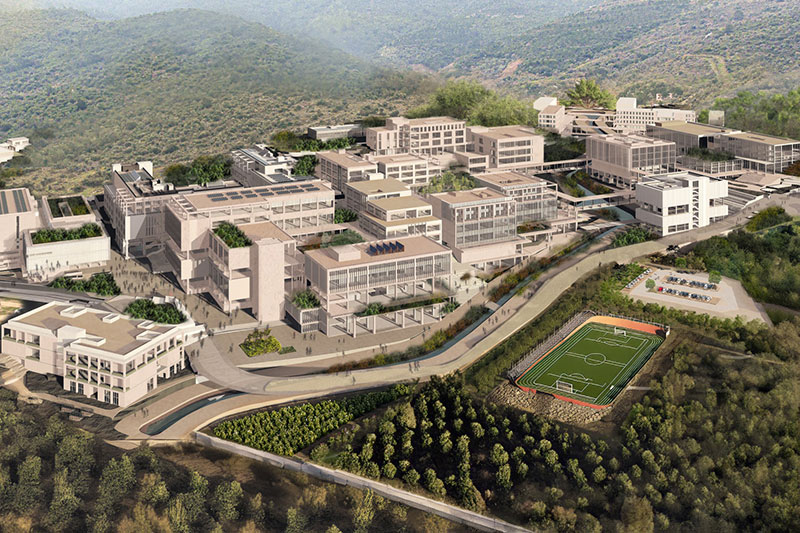
IZMIR UNIVERSITY OF ECONOMICS GÜZELBAHÇE CAMPUS
DetailsGLOBAL CAREER
As Izmir University of Economics transforms into a world-class university, it also raises successful young people with global competence.
More..CONTRIBUTION TO SCIENCE
Izmir University of Economics produces qualified knowledge and competent technologies.
More..VALUING PEOPLE
Izmir University of Economics sees producing social benefit as its reason for existence.
More..
You are one step ahead with your graduate education at Izmir University of Economics.